
Best Outdoor Team Activities for Corporate Event Entertainment: 13 Ideas That Actually Engage
Lots of outdoor corporate events hit the same snag. People show up, grab food or a drink, and stick to the same small groups they arrived with. Companies and venues change, but the behavior stays the same.
Without a clear reason to engage differently, attendees default to their comfort zone. That limits interaction across teams, reduces overall energy, and leaves the event’s true team-building potential untapped.
Well-designed outdoor team activities change that. They create low-friction entry points into participation, give people a shared structure for interaction, and make it easier to step outside routine without forcing it.
At Something New, we approach outdoor team activities for corporate event entertainment as participation systems. The goal is simple: Make it easy for people to join, stay, and come back to the action.
Before getting into specific ideas, let’s review three big-picture strategic considerations that consistently shape successful outdoor event design.
Make Participation Easy
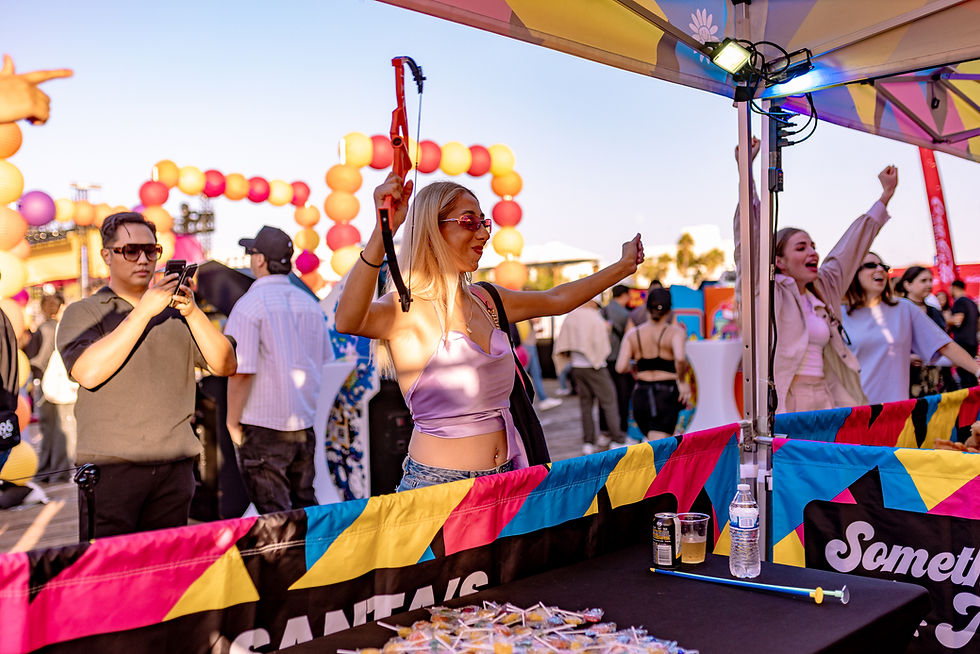
An activity that requires explanation will struggle to build momentum. The most effective outdoor team activities can be understood within a few seconds of observation. Attendees should be able to watch someone else participate and immediately grasp what’s happening and how to join. This is what turns passive observation into active engagement. Clarity removes hesitation, and once that first step is easy, participation tends to follow naturally.
Design for Flow, Not Just Moments
A single great activity can draw attention, but it won’t sustain engagement on its own. Strong outdoor event design considers how people move through the space over time. Activities should support quick entry and exit, minimal waiting, and the ability to move between experiences without friction. When flow is working, the event feels active everywhere, not just in one location.
Create Space for Different Participation Styles
Not everyone engages the same way. Some attendees jump into competition immediately, while others prefer to observe before joining. Some want structured activities; others respond better to open, drop-in formats. The most effective outdoor team activity mixes account for this range. They offer multiple entry points so that participation feels optional, not prescribed.
13 Outdoor Team Activities We Love
This list is just a sampling of the outdoor team activities we’ve seen perform well at corporate events. Each one features some guidance on how and why the activity works. If any activities on this list sound right for your event or inspire a great idea that’s not included below, we can’t wait to hear from you.
1. Carnival Games
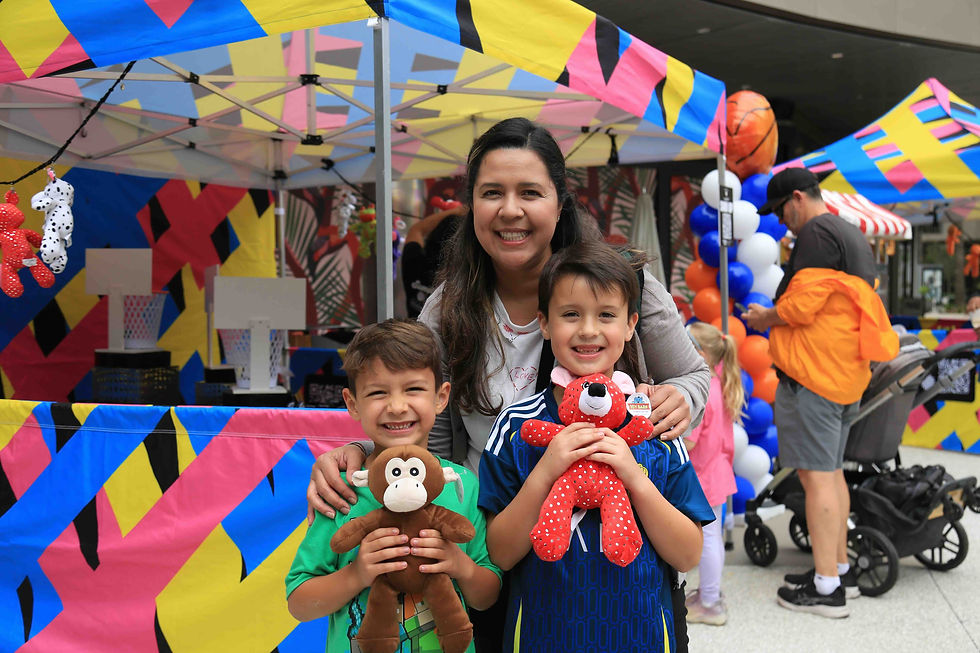
Carnival games are one of the most effective ways to drive participation at outdoor corporate events. They combine familiarity with flexibility, which makes them easy to approach for a wide range of attendees. Classic formats like target toss challenges, ring toss, or ball throws give people a clear objective within seconds.
That clarity is what drives engagement. Attendees can watch briefly, understand the goal, and step in without hesitation. The outcome is visible in real time, which creates a natural audience and encourages others to join. This dynamic helps build steady participation throughout the event.
Carnival-style setups can also expand beyond traditional formats. Outdoor arcade games fit naturally into this category when adapted for open-air environments. Together, these elements create a cohesive play experience that feels accessible, recognizable, and easy to scale.

2. Field Day Experiences
Field day experiences bring a structured, team-based format to outdoor corporate events without making the environment feel overly formal. Activities like relay-style team races fit naturally here, along with other short, rotating challenges that groups can move through together.
These experiences work because they distribute participation. Each team member contributes in a different way, which keeps the activity inclusive and prevents any one person from carrying the experience. Teams tend to build momentum as they progress, which helps sustain energy over time.
The key is to keep each component simple and fast-moving. Clear objectives and quick transitions allow teams to stay engaged without getting slowed down by instructions or logistics.
3. Lawn Game Clusters
Lawn games are a staple of outdoor corporate event entertainment, but their effectiveness depends on presentation. A single game can feel incidental; a cluster creates a destination.
Grouping multiple games together allows attendees to move between them at their own pace. This lowers the pressure to commit to a single experience and supports different levels of engagement.
These clusters also increase dwell time. Once someone enters the space, they are more likely to stay, explore, and bring others into the experience.

4. Timed Skill Challenges
Timed challenges introduce urgency without adding pressure. Participants are given a short window to complete a task, creating a clear beginning and end.
This format is highly visible, which makes it effective in outdoor settings. A countdown or timer draws attention, and results are immediately clear to participants and spectators.
Short cycles are essential. Keeping each attempt brief ensures steady participation and prevents bottlenecks.
5. Collaborative Build Activities
Collaborative builds shift the focus from competition to coordination. Teams work together to construct something or complete a shared task.
These activities encourage communication without forcing it. The shared goal creates structure, while the open-ended process allows people to engage naturally.
They are especially effective for cross-team interaction. Because success depends on contribution rather than individual performance, participants are more likely to engage with new groups.

6. Staged Contests
Staged contests introduce moments of focused attention within a larger event. These are short, scheduled competitions that invite participants to step forward while others gather to watch.
This format creates a shared focal point. Attention concentrates for brief periods, which can reset energy and draw in new participants who may not have engaged otherwise.
To be effective, staged contests should be concise and clearly facilitated. Simple rules, visible outcomes, and strong pacing help ensure these moments feel dynamic and integrated into the event rather than disruptive.
7. One-Attempt Challenge Stations
Single-attempt challenges lower the barrier to entry by requiring minimal commitment. Participants get one try, which makes the experience feel quick and approachable.
This format creates natural moments of anticipation. Observers watch for the outcome, react, and often decide to participate themselves.
The simplicity is what makes these stations effective. A clear objective and visible result are enough to sustain engagement.

8. Interactive Leaderboard Competitions
Leaderboards add a light competitive layer that can extend engagement across the event. Participants are motivated not just to play, but to improve their standing.
Short-term leaderboards tend to perform better than event-long formats. Periodic resets keep the experience accessible and prevent early participants from dominating.
Visibility is critical. When scores are easy to see, participation increases.
9. Photo Booths
Photo booths are a consistent performer at outdoor corporate events. Their impact improves with intentional design, so consider offering more than a simple backdrop and camera setup to help these stand out in a busy environment.
The most effective photo booths create a clear visual concept. That might mean a branded environment, a thematic build, or a setting that feels distinct enough to draw attention from a distance. New technologies can also let attendees make use of fun filter effects or convert their photos to digital caricatures. When attendees can immediately understand what kind of photo they will get, participation increases.
Photo booths also extend the experience beyond the event itself. Attendees leave with a tangible or shareable takeaway, which reinforces the moment and creates additional visibility for the brand.
10. Scavenger Hunts
Scavenger hunts encourage movement, exploration, and interaction across the entire event space. Participants work individually or in teams to complete a series of prompts or challenges.
This format extends engagement beyond a single location. Instead of gathering in one place, participants circulate, interact with different elements of the event, and engage with new groups along the way.
Photo-based components can add another layer. Asking participants to capture specific moments or scenes creates a tangible output while reinforcing the sense of exploration. Keeping prompts clear and manageable ensures participation remains fluid.
11. Experiential “Try Something New” Stations
These stations introduce activities that feel slightly outside everyday experience. A new skill, a novel mechanic, or a simple challenge can create curiosity.
When something looks approachable but unfamiliar, people are more likely to engage. That sense of discovery is a strong participation driver.
The experience should be short and self-directed. Quick entry and exit keep the station accessible and easy to integrate into the broader event flow.

12. Facilitated Pop-Up Challenges
Pop-up challenges are short, facilitated moments that activate the broader crowd. They might include a quick competition or a group-based activity led by an operator.
These moments help reset energy throughout the event. They create shared experiences that extend beyond individual groups and encourage broader participation.
Timing is important. Introducing these challenges at natural lulls keeps the event dynamic without disrupting overall flow.
13. Multi-Station Play Zones
Multi-station setups combine several activity types into a cohesive environment. A mix of games, challenges, and open play areas creates flexibility.
This approach increases dwell time and supports a wide range of participation styles. Attendees can move through the space, engage at their own pace, and return as the event progresses.
The key is cohesion. Clear flow and consistent design ensure the experience feels intentional rather than fragmented.
Final Thought
The best outdoor team activities for corporate event entertainment aren’t defined by scale or complexity. They work because they are visible, accessible, and easy to join. When you program your event with activities that check these boxes, participation comes naturally and the experience is better for everyone.
About Something New
At Something New, we design and operate interactive outdoor experiences to suit every kind of player. Our work spans custom carnival games, field day programs, contests & game nights, trade show booths, branded play zones, and fully managed event activations for groups of all sizes. We partner with organizations to handle everything from concept development and fabrication to staffing and on-site execution.
Whether you have a clear idea of the perfect interactive experiences to complement your corporate event or want to brainstorm game concepts, visual design, and event layout from the ground up, we’re ready to jump on board. Our team’s goal isn’t just to fill space. It’s to give your team an environment where people actively participate, engage and celebrate together, and leave with something memorable.


Comments